
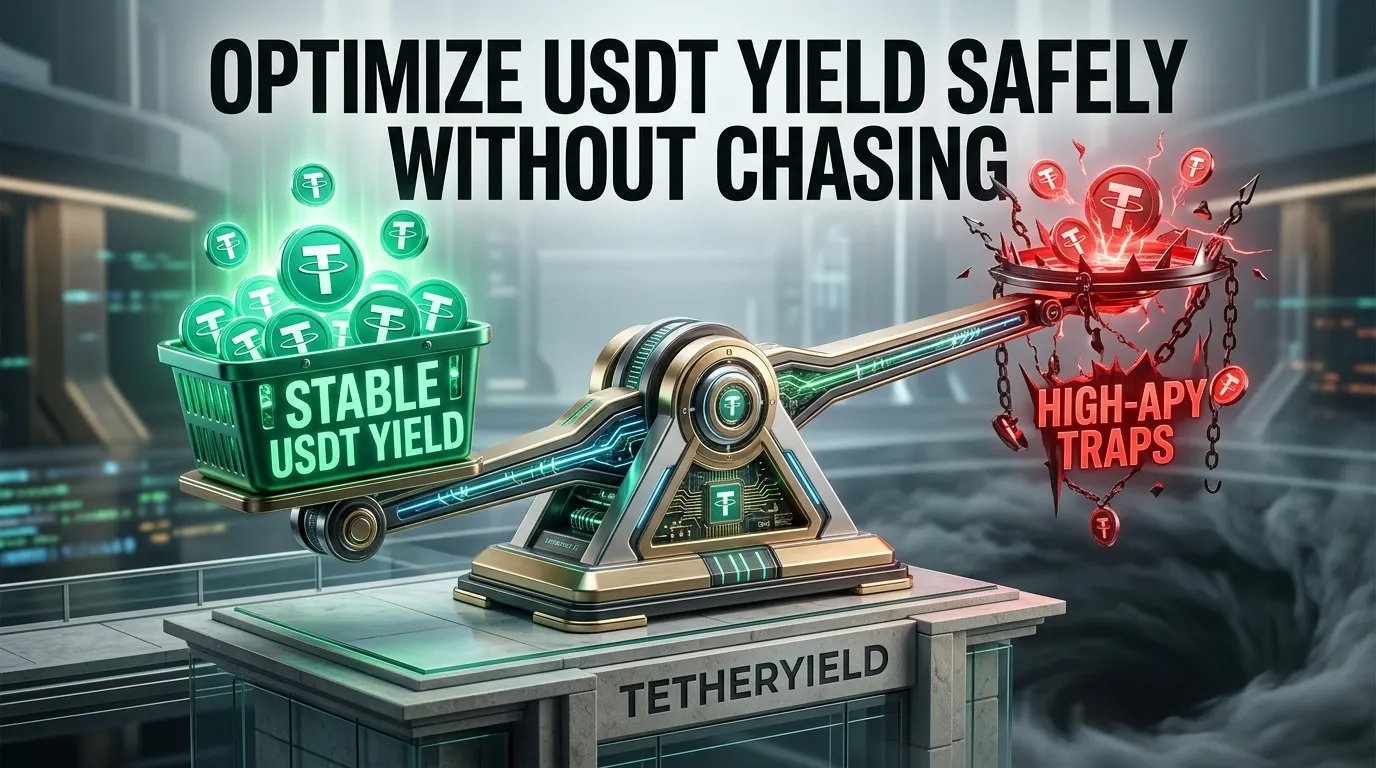
Focus on net realized yield, not inflated headline numbers
In the hunt for passive income, crypto investors frequently fall for astronomical annual percentage yields (APYs). However, a high headline number often conceals aggressive lockup penalties, steep withdrawal charges, and unstable promotional rates that vanish after weeks.
On TetherYield, disciplined strategy begins by calculating net realized returns under real-world conditions. When factoring in on-chain gas fees, payout cadences, and capital lock periods, a sustainable, transparent rate consistently beats an erratic high-risk promise.
- Separate paper APY from net realized cash: Deduct network transfer fees and platform settlement costs from your gross earnings.
- Evaluate withdrawal flexibility: Ensure on-demand access to accrued interest rather than compulsory compounding lockups.
- Test conservative return scenarios: Model your financial plan around realistic base rates instead of peak marketing promotions.
- Weigh risk versus reward: Assess whether a tiny percentage bump justifies exposing your principal to unverified operational risks.

Structure your allocation around disciplined liquidity tiers
Treating all USDT holdings uniformly is a critical risk mistake. Funds needed for everyday expenses or sudden market buying opportunities must never be locked in fixed-term vaults, regardless of how attractive the rate appears.
By segmenting capital into clear liquidity tiers, you establish a financial firewall. This structure allows you to earn dependable yield on committed reserves without sacrificing emergency readiness.
- Tier 1 (Instant Emergency Reserve): Keep liquid funds in non-custodial wallets for instant spending without unbonding delays.
- Tier 2 (Flexible Daily Yield): Allocate capital to TetherYield flexible plans for daily interest crediting with on-demand liquidity.
- Tier 3 (Fixed Growth Capital): Commit surplus funds to longer-horizon fixed terms to lock in higher, predictable yields.
- Liquidity protection rule: Never commit money to fixed terms if you might need to access it within the next 30 days.

Diversify genuine risk factors, not just platform brand names
Many investors believe they are diversified simply by splitting their USDT across multiple platforms. However, if those platforms all rely on the same underlying custodial models, smart-contract bridges, or illiquid counterparties, systemic risk remains identical.
True diversification focuses on understanding operational infrastructure. Evaluate custody architecture, blockchain network stability (TRC20, ERC20, BEP20), and withdrawal settlement mechanisms before distributing your stablecoin capital.
- Audit counterparty dependencies: Identify whether multiple yield providers utilize identical custodial or lending mechanisms.
- Verify blockchain network costs: Choose cost-effective transfer networks while maintaining reliable transaction speeds.
- Understand smart-contract exposure: Recognize the cryptographic and operational mechanisms protecting your balance.
- Avoid over-complication: Keep your portfolio simple enough to monitor daily through transparent on-chain records.
Establish a disciplined review and rebalancing cadence
A resilient USDT yield strategy is never set-and-forget. Market interest rate environments evolve, network transaction costs fluctuate, and personal living expenses shift throughout the year.
On TetherYield, proactive investors conduct scheduled check-ins to audit settlement TxIDs, review active plan durations, and adjust allocations before renewing terms. Regular reviews maintain peace of mind and protect long-term financial health.
- Has the underlying reward calculation or settlement cadence changed?
- Are network withdrawal fees and transfer times operating normally?
- Do I still maintain an adequate buffer of instant, unbonded cash?
- Has my exposure to any single plan or term duration become unbalanced?
- Do the current TetherYield plan terms and official risk disclosures align with my financial goals?
- Should accumulated daily payouts be withdrawn to cold storage or redeployed into higher-yield compounding?