
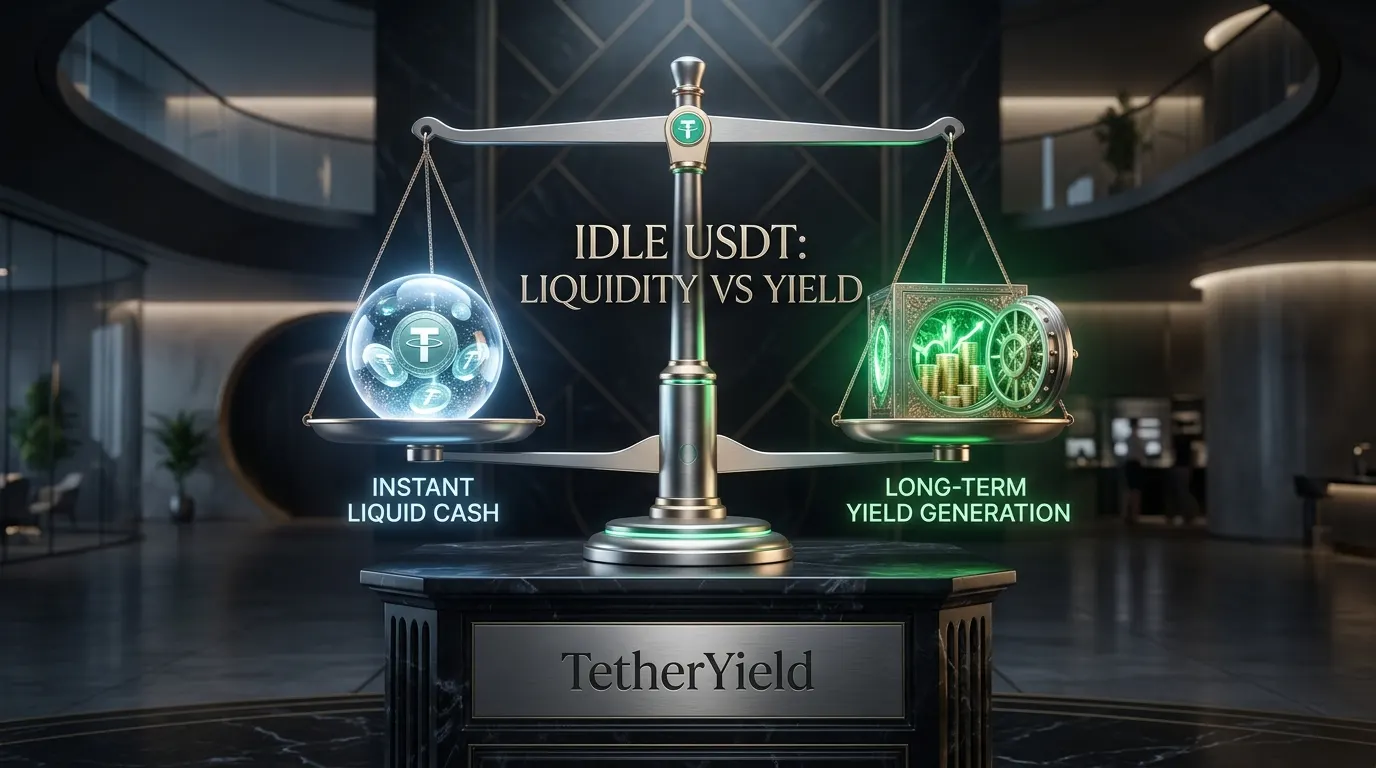
अप्रयुक्त USDT रखना कोई गलती नहीं: तत्काल तरलता का रणनीतिक महत्व
तेजी से बदलते क्रिप्टो बाजार में, व्यक्तिगत वॉलेट में बिना आवंटन के USDT रखना अक्सर मनोवैज्ञानिक दबाव और दैनिक यील्ड छूटने का डर पैदा करता है। हालांकि, तत्काल नकदी तरलता का एक गहरा रणनीतिक मूल्य है जिसे केवल रिटर्न प्रतिशत से नहीं मापा जा सकता।
अप्रत्याशित पारिवारिक खर्चों, बाजार गिरावट के अवसरों या नियमित भुगतानों के लिए आरक्षित पूंजी हमेशा उपलब्ध रहनी चाहिए। मुख्य सवाल यह नहीं है कि हर एक USDT टोकन काम करे, बल्कि यह है कि आपके बैलेंस का कितना सटीक प्रतिशत आपकी दैनिक वित्तीय स्वतंत्रता को सीमित किए बिना सुरक्षित रूप से निवेश किया जा सकता है।
- तत्काल आपातकालीन रिजर्व: अनलॉकिंग अवधि या प्रतीक्षा समय पर निर्भर हुए बिना दैनिक जीवन के लिए हमेशा तैयार फंड रखें।
- बाजार में चपलता: लिक्विड USDT रखने से आप अचानक बाजार गिरावट के दौरान तेजी से खरीदारी के अवसर तुरंत पकड़ सकते हैं।
- मानसिक शांति: कभी भी ऐसी पूंजी लॉक न करें जिसकी अस्थायी अनुपलब्धता आपको भावनात्मक तनाव या वित्तीय चिंता में डाल दे।
- स्पष्ट समय सीमा: अपने फंड को इस आधार पर वर्गीकृत करें कि आपको वास्तव में अपने व्यक्तिगत खाते में उनकी आवश्यकता कब होगी।
केवल विज्ञापित APY न देखें, प्लान की संपूर्ण शर्तों का मूल्यांकन करें
कई क्रिप्टो निवेशक केवल उच्चतम वार्षिक रिटर्न (APY) देखकर यील्ड उत्पादों को चुनने की गलती करते हैं। दोहरे अंकों का रिटर्न भ्रामक हो सकता है यदि लॉकअप नियम आपकी सबसे जरूरत के समय आपकी पूंजी तक पहुंच को रोकते हैं।
TetherYield पर पारदर्शिता का अर्थ पूरे परिचालन ढांचे की जांच करना है। पूंजी आवंटित करने से पहले लॉकअप अवधि, ब्याज भुगतान आवृत्ति, न्यूनतम प्रवेश सीमा और निकासी नेटवर्क शुल्क की तुलना अवश्य करें।
- लॉकअप लचीलापन: जांचें कि क्या प्लान लचीली दैनिक निकासी की अनुमति देता है या इसमें निश्चित लॉक अवधि अनिवार्य है।
- भुगतान आवृत्ति: पुष्टि करें कि क्या लाभ दैनिक रूप से उपलब्ध बैलेंस में जमा होता है या परिपक्वता तक रुका रहता है।
- पारदर्शी शुल्क ढांचा: ऑन-चेन नेटवर्क लागतों की समीक्षा करें और सुनिश्चित करें कि कोई छिपा हुआ प्रबंधन शुल्क न काटा जाए।
- समयपूर्व निकासी नीति: यदि आपात स्थिति में पूंजी जल्दी निकालनी पड़े, तो सटीक शर्तों, निपटान समय और नियमों को समझें।
- रिटर्न की स्थिरता: वास्तविक बाजार आधारित रिटर्न और केवल प्रचार के लिए दी जाने वाली अल्पकालिक दरों के बीच अंतर पहचानें।
स्टेबलकॉइन यील्ड रणनीतियों में जोखिम की छिपी परतें
सीधे अमेरिकी डॉलर से पेग्ड होने के कारण, USDT आपको बिटकॉइन या एथेरियम के भारी उतार-चढ़ाव से बचाता है। इसके बावजूद, स्टेबलकॉइन पर यील्ड प्राप्त करना कभी भी पूरी तरह जोखिम-मुक्त नहीं होता, और अनुशासित निवेशकों को परिचालन परतों को समझना चाहिए।
सुलझा हुआ पोर्टफोलियो प्रबंधन प्लेटफॉर्म कस्टडी प्रोटोकॉल, स्मार्ट कॉन्ट्रैक्ट निष्पादन, ब्लॉकचेन नेटवर्क कंजेशन और नियामक परिवर्तनों को ध्यान में रखता है। इन कारकों को समझने से आप अत्यधिक जोखिम लेने के बजाय संयमित स्थिति आकार चुन सकते हैं।
- स्टेबलकॉइन जारीकर्ता का रिजर्व: यह समझना कि पेग्ड संपत्तियां जारीकर्ता के संपार्श्विक भंडार और मोचन तंत्र पर निर्भर करती हैं।
- प्लेटफॉर्म कस्टडी सुरक्षा: एंटरप्राइज-ग्रेड क्रिप्टोग्राफिक कुंजी प्रबंधन और पृथक खाता प्रणाली की पुष्टि करना।
- ब्लॉकचेन नेटवर्क कंजेशन: अत्यधिक बाजार अस्थिरता के दौरान ऑन-चेन लेनदेन में संभावित देरी का ध्यान रखना।
- संतुलित स्थिति आकार: अपनी पूरी कुल संपत्ति को कभी भी किसी एक प्रोटोकॉल या एक संपत्ति वर्ग में केंद्रित न करें।
3-बाल्टी नियम: अनुशासित निवेशक अप्रयुक्त USDT का आवंटन कैसे करते हैं?
अपने USDT बैलेंस को 'सब कुछ या कुछ नहीं' के दृष्टिकोण से देखने के बजाय, पेशेवर संपत्ति प्रबंधक अपने स्टेबलकॉइन रिजर्व को तीन समर्पित बाल्टियों में विभाजित करते हैं। यह बहु-स्तरीय संरचना सुरक्षा, लचीलेपन और स्थिर संपत्ति संचय का संतुलन बनाती है।
TetherYield पर अपने अप्रयुक्त फंड को पूरे विश्वास के साथ संरचित करने के लिए इस 3-बाल्टी ढांचे का उपयोग करें:
- बाल्टी 1 (तत्काल तरलता: 20–30%): तत्काल खर्चों और अप्रत्याशित आपात स्थितियों के लिए आपके व्यक्तिगत नॉन-कस्टोडियल वॉलेट में रखी जाती है।
- बाल्टी 2 (लचीली यील्ड: 30–40%): स्थिर दैनिक ब्याज कमाने और निकासी की स्वतंत्रता बनाए रखने के लिए TetherYield फ्लेक्सिबल प्लान में लगाई जाती है।
- बाल्टी 3 (सावधि वृद्धि: 30–50%): दीर्घकालिक चक्रवृद्धि लाभ हासिल करने के लिए उच्च यील्ड वाले सावधि प्लान में आवंटित की जाती है।
- नियमित पोर्टफोलियो पुनर्संतुलन: मासिक रूप से अपने तरलता स्तरों की समीक्षा करें और आगामी नकदी जरूरतों के आधार पर अनुपात समायोजित करें।
- स्वतंत्र सत्यापन: ब्लॉकचेन पर अपने भुगतान TxID और व्यक्तिगत लेनदेन लेजर की नियमित रूप से जांच करें।
- जोखिम समीक्षा: किसी भी अवधि को नवीनीकृत करने से पहले TetherYield प्लान की शर्तों और आधिकारिक जोखिम प्रकटीकरण को दोबारा पढ़ें।