
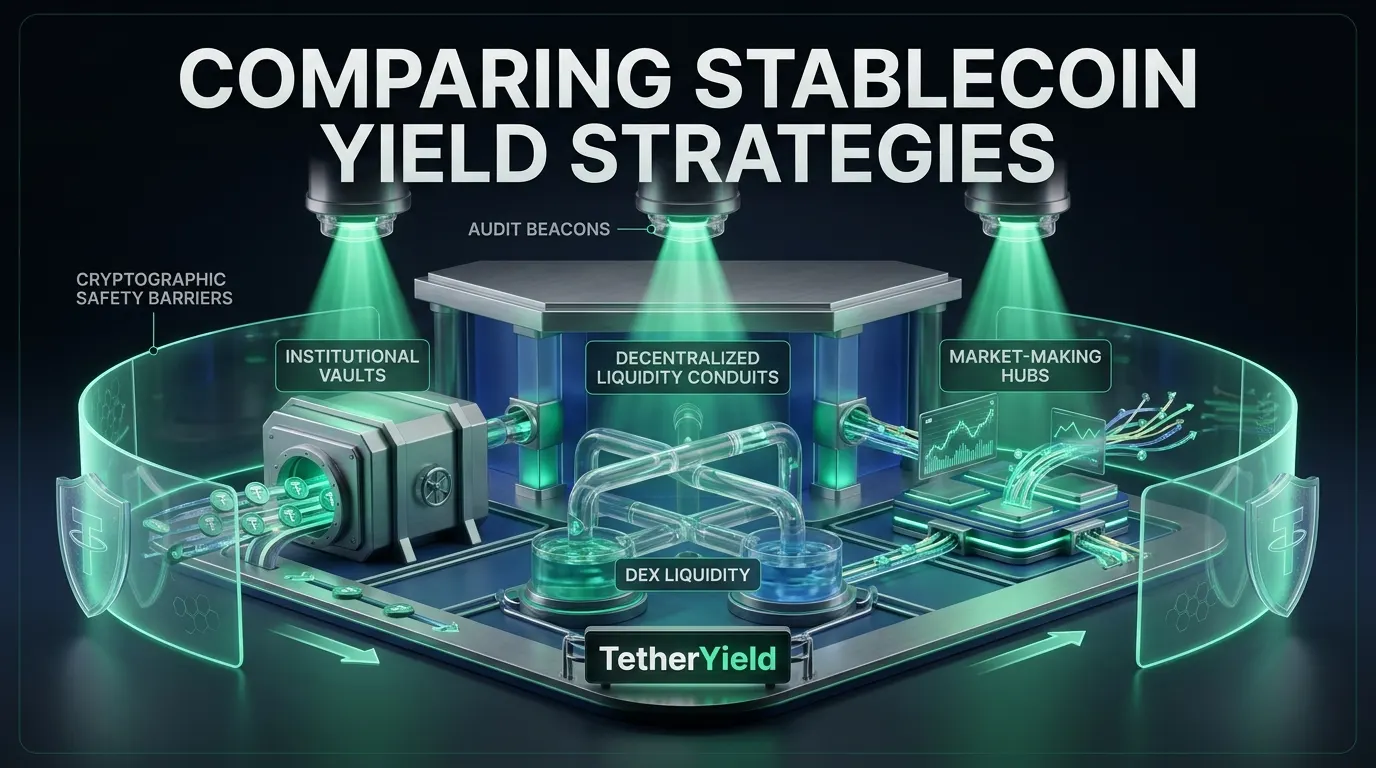
स्टेबलकॉइन यील्ड मॉडलों का वर्गीकरण: CeFi, DeFi और संरचित रणनीतियाँ
डिजिटल एसेट इकोसिस्टम में 'स्टेबलकॉइन स्टेकिंग' शब्द कई अलग-अलग वित्तीय मॉडलों को शामिल करने वाला एक सामान्य शब्द है। चूंकि USDT एक अमेरिकी डॉलर-समर्थित मुद्रा है न कि प्रूफ-ऑफ-स्टेक ब्लॉकचेन टोकन, इसलिए रिटर्न विशिष्ट बाजार गतिविधियों में पूंजी लगाने से उत्पन्न होता है।
केंद्रीकृत वित्त (CeFi) मॉडल संस्थागत ऋण और एक्सचेंज ऑर्डर-बुक तरलता पर निर्भर करते हैं। विकेंद्रीकृत वित्त (DeFi) प्रोटोकॉल स्वचालित मार्केट मेकर्स (AMMs) और स्मार्ट अनुबंधों द्वारा संचालित एल्गोरिदम ऋण पूलों का उपयोग करते हैं। वहीं TetherYield जैसे संरचित प्लेटफॉर्म मार्केट-न्यूट्रल आर्बिट्राज, ट्रेजरी परिसंपत्तियों और अलग संस्थागत कस्टडी को जोड़ते हैं। आपकी पूंजी किस मॉडल में काम कर रही है, यह जानना ड्यू डिलिजेंस का पहला अनिवार्य कदम है।
- संस्थागत ऋण (CeFi): सत्यापित कॉर्पोरेट उधारकर्ताओं द्वारा भुगतान किए गए ब्याज से प्राप्त यील्ड।
- विकेंद्रीकृत पूल्स (DeFi): लेनदेन स्वैप शुल्क और प्रोटोकॉल लिक्विडिटी प्रोत्साहन से अर्जित आय।
- संरचित यील्ड रणनीतियाँ: ट्रेजरी-समर्थित नकदी प्रवाह और डेल्टा-न्यूट्रल आर्बिट्राज को संतुलित करने वाले पोर्टफोलियो।
- कस्टडी वास्तुकला: सेल्फ-कस्टडी अनुबंधों और अलग संस्थागत वॉल्ट्स के बीच स्पष्ट परिचालन सीमाएं।
उच्च विज्ञापित यील्ड में खतरे के संकेत: छिपे लीवरेज और प्रमोशनल जालों की पहचान
यील्ड उत्पादों की खोज करते समय अत्यधिक रिटर्न प्रतिशत तुरंत खुदरा निवेशकों का ध्यान आकर्षित करता है। लेकिन संस्थागत वित्त में जोखिम और रिटर्न अविभाज्य हैं। बाजार के औसत से काफी अधिक यील्ड दर लगभग हमेशा असममित जोखिम छुपाती है।
सामान्य चेतावनी संकेतों में ऐसे प्लेटफॉर्म शामिल हैं जो अपने स्वयं के मुद्रास्फीतिकारी रिवॉर्ड टोकन जारी करके रिटर्न देते हैं, बिना हेजिंग के लीवरेज का उपयोग करते हैं, या कई महीनों के कठोर लॉकअप लागू करते हैं जिससे बाजार में गिरावट के समय निकासी असंभव हो जाती है। यदि कोई प्लेटफॉर्म सरल शब्दों में यह नहीं बता सकता कि उसका लाभ कहां से आता है, तो आपका मूलधन जोखिम में है।
- सिंथेटिक टोकन भुगतान: वास्तविक भुनाने योग्य USDT के बजाय अस्थिर सेकेंडरी टोकन में दिए जाने वाले रिवॉर्ड।
- अस्थायी प्रमोशनल प्रलोभन: अल्पकालिक विज्ञापन सब्सिडी जो उपयोगकर्ताओं की पूंजी लॉक होते ही समाप्त हो जाती है।
- अपारदर्शी री-हाइपोथेकेशन: पारदर्शी संपार्श्विक आवश्यकताओं के बिना उपयोगकर्ता जमा को कई बार उधार देना।
- अस्पष्ट कॉर्पोरेट संरचनाएं: सत्यापन योग्य कंपनी पंजीकरण, नेतृत्व पारदर्शिता या स्वतंत्र ऑडिट रिपोर्ट का अभाव।
टोकन मूल्य स्थिरता और उत्पाद की समग्र सुरक्षा में अंतर समझना
शुरुआती निवेशकों में एक आम गलतफहमी यह है कि चूंकि USDT $1.00 पर आंका गया है, इसलिए USDT रखने वाला कोई भी उत्पाद स्वतः सुरक्षित है। हालांकि स्टेबलकॉइन रखने से बिटकॉइन या ऑल्टकॉइन की कीमत की अस्थिरता से बचाव होता है, लेकिन यह उत्पाद-स्तरीय परिचालन जोखिमों को समाप्त नहीं करता है।
वास्तविक उत्पाद सुरक्षा कस्टडी प्रथाओं, प्रोटोकॉल सुरक्षा, नेटवर्क क्षमता और आपके फंड को रखने वाले प्लेटफॉर्म के नियमों से तय होती है। एक परियोजना 100% USDT रख सकती है और फिर भी स्मार्ट अनुबंध की खामियों, निकासी बंद होने या उधारकर्ताओं के दिवालिया होने के कारण विफल हो सकती है। अनुशासित निवेशक मुद्रा पेग से स्वतंत्र होकर उत्पाद की मजबूती का मूल्यांकन करते हैं।
- स्टेबलकॉइन पेग स्थिरता: जारीकर्ता के रिज़र्व सत्यापन और रिडेम्पशन तंत्र की नियमित निगरानी।
- प्लेटफॉर्म सॉल्वेंसी: यह सुनिश्चित करना कि पूंजी को अलग खातों में प्रबंधित किया जाए, न कि कंपनी के खर्चों के साथ मिलाकर।
- स्मार्ट अनुबंध ऑडिट: बिना किसी बैकडोर या एकतरफा व्यवस्थापक नियंत्रण के स्वतंत्र तकनीकी ऑडिट की उपस्थिति।
- नेटवर्क ट्रांसफर दक्षता: TRC20, ERC20 और BEP20 पर पुष्टिकरण समय और गैस शुल्क को ध्यान में रखना।
आवश्यक ड्यू डिलिजेंस: कस्टडी, लिक्विडिटी नियम और निकासी समय सीमा की पुष्टि
एक सहज निवेश अनुभव और वित्तीय तनाव के बीच का अंतर लगभग हमेशा लिक्विडिटी की शर्तों पर निर्भर करता है। समान वार्षिक यील्ड देने वाले दो प्लेटफॉर्म पूरी तरह से विपरीत परिणाम दे सकते हैं यदि एक लचीली दैनिक निकासी की अनुमति देता है जबकि दूसरा 90 दिनों के कठोर लॉकअप और दंड लगाता है।
किसी भी यील्ड खाते में पूंजी डालने से पहले रिडेम्पशन शर्तों की सावधानीपूर्वक जांच करें। पुष्टि करें कि क्या दैनिक ब्याज सीधे उपलब्ध बैलेंस में जमा होता है जिसे किसी भी समय निकाला जा सकता है, प्रसंस्करण समय सीमा क्या है, और क्या समय से पहले निकासी पर कोई शुल्क लगता है। आप अपना पैसा कब और कैसे वापस प्राप्त करते हैं, इसमें पारदर्शिता ही किसी प्लेटफॉर्म की ईमानदारी का सबसे बड़ा पैमाना है।
- प्रतिबद्धता अवधि: लचीली दैनिक पहुंच बनाम कई हफ्तों का कठोर लॉकअप।
- यील्ड निपटान आवृत्ति: परिपक्वता तक लॉक रहने के बजाय दैनिक बैलेंस क्रेडिट।
- पूंजी रिलीज तंत्र: मूलधन को निजी वॉलेट में वापस भेजने की स्पष्ट और स्वचालित प्रक्रियाएं।
- शुल्क पारदर्शिता: निकासी स्प्रेड, ब्लॉकचेन गैस शुल्क और प्रबंधन लागत का पूर्ण प्रकटीकरण।
अपनी पूंजी ट्रांसफर करने से पहले 5-चरणीय सत्यापन चेकलिस्ट
एक मानकीकृत ड्यू डिलिजेंस प्रक्रिया आपको मार्केटिंग प्रचार या छूट जाने के डर से लिए गए जल्दबाजी के फैसलों से बचाती है। किसी भी स्टेबलकॉइन रणनीति में पूंजी लगाने से पहले इन पांच प्रमुख सवालों के जवाब अवश्य लें।
TetherYield में परिचालन पारदर्शिता हमारे मूल दर्शन का हिस्सा है। हम अपने ट्रस्ट सेंटर में स्पष्ट योजना शर्तें, सत्यापन योग्य भुगतान कार्यक्रम और व्यापक जोखिम दस्तावेज प्रदान करते हैं। फंड ट्रांसफर करने से पहले अनुशासित सत्यापन करके, आप सुनिश्चित करते हैं कि आपकी पूंजी सुरक्षित रूप से काम करे और निरंतर बढ़े।
- विज्ञापित यील्ड उत्पन्न करने वाला सटीक आर्थिक तंत्र क्या है, और इसका भुगतान कौन करता है?
- रणनीति सक्रिय रहने के दौरान मेरे फंड की क्रिप्टोग्राफिक कस्टडी किसके पास होती है?
- क्या रिटर्न वास्तविक USDT में दिया जाता है या सट्टा आधारित मुद्रास्फीतिकारी टोकन में?
- क्या मैं अपने दैनिक ब्याज और मूलधन को लचीले ढंग से निकाल सकता हूँ, या मैं निश्चित अवधि से बंधा हूँ?
- क्या मैंने आधिकारिक सेवा शर्तों, शुल्क तालिकाओं और जोखिम प्रकटीकरण को ध्यान से पढ़ लिया है?